Marina Maxwell
  • Home
  • Blogs
  • About Me
  • My Books
  • Book Reviews

Reviews


​
I read and review both historical fiction and non-fiction, but also enjoy biographies, crime and some contemporary fiction.
​ 

Please note that unless stated that I have received these books directly from the publisher or author in exchange for an honest review, I either purchase my own copies or source them from my local library service. 

​Links to Amazon, Booktopia, Dymocks or other booksellers are only for the reader's reference.

My reviews for Historical Novels Review can be found online here
My Goodreads reviews can be found here.

​

The Keepers of the Lighthouse

22/8/2023

0 Comments

 
Picture
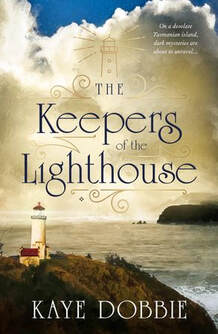
In 1882, Laura Webster lives with her father Leo and stepmother Miriam on a remote island in Bass Strait between mainland Australia and Tasmania. Leo has charge of the island's lighthouse, helped by Laura and a somewhat unreliable assistant manager, Rorie.

During a horrendous storm, the vessel Alvarez is wrecked on the island's treacherous rocks and Laura and her father must do what they can to rescue any survivors. These include the mate and a crew member, also a Mr Jones, a Mrs Munro and an English remittance man, Edmund Bailey. It is not long before strange things start happening, when Rorie seems to recognise one of the survivors. Against her own instincts, Laura finds herself drawn to Edmund. 

In 2020, Nina is project manager of a heritage group consisting of employees and volunteers sent to the island during the Covid pandemic to help with maintenance and conservation. She is dismayed to find Jude Rawlins is among them, her one-time lover. Their break-up was especially traumatic and Nina has never got over it. The mix also includes her good friend, Paul, but also the jealous Lis who knows of her past history with Jude. When a satellite phone, their only contact with the mainland, is found destroyed, followed by further sabotage, it is clear someone in their group may have a hidden agenda.

I am ambivalent about dual timelines as this often means one narrative can be more interesting than the other. In this case, the island atmosphere, stronger characters and mysterious happenings of 1882 are far superior to the contemporary story. This is largely the fault of Nina who seems weak and dithery compared to the stoic Laura and so I failed to be moved by her woes. Also, I found some aspects of the modern story didn't really ring true. It is hard to believe that Nina and her chums had no other way of contacting the mainland other than by one solitary satellite phone. Bass Strait isn't that remote any more!

This author has written some good historical novels - "Sweet Wattle Creek" is one example - so I was a bit disappointed in this one.

Three stars.

amazon.com.au
​(the book does not appear to be listed yet on amazon.com or amazon.co.uk)

Booktopia  


0 Comments

Lessons in Chemistry

17/8/2023

0 Comments

 
Picture
 
I always approach books that are mega-bestsellers or prestigious prize winners with a great deal of caution, sometimes only reading them after the initial buzz has died down.
 
Books that have garnered excessive or lavish praise tend to make me wary, as I’ve read far too many that have failed to move me as they did others as they can be filled with experimental styles, artful manipulation of the reader and often a sense of the author’s own self-aggrandisement. I couldn’t get into the famous “Wolf Hall” trilogy by Hilary Mantel, although I am assured by other readers who are far more intellectual than me that it is brilliant if one can deal with the difficult prose. I disliked “The Tattooist of Auschwitz” and “A Gentleman in Moscow” for their skewed history, and “Where the Crawdads Sing” was a shocker, for too many reasons to list here. “Gone Girl” left me fuming.
 
Hence, I bought a copy of “Lessons in Chemistry” with some foreboding that once again I’d find myself swimming against the tide of opinion. And to some degree I am - baffled, yet unsurprised, by its success.
 
I won’t take up space with the storyline here, as countless others have reviewed this book and you can read all the five-star gush in newspapers, magazines, book blogs and sites like Goodreads. I see there is a mini-series on the way as well.
 
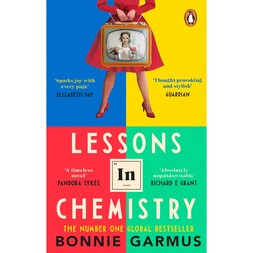
In a nutshell, in the 1950s, Elizabeth Zott is a frustrated chemist who becomes a TV cook and inspires feminism in her viewers. Prior to this, she has endless problems with the male hierarchy in science institutions, falls in love with a fellow outsider, Calvin Evans, has his illegitimate daughter, Mad(eline), owns a dog called Six-Thirty, and with her stubbornness, insensitivity and incapacity for conciliation is often her own worse enemy in her handling of other people. Sure, she is justified in getting her own back on sexual assaults, stolen research, and religious folk, but she is hardly a character that you warm to.
 
I’ve never liked novels (or movies) with overly smart kids, so I was off on the wrong foot with Mad, who is unbelievably precocious, reading adult books and having adult philosophical discussions from the age of four. Really! The dog, who regularly gives his opinions on life, is more schmaltz that is beyond ridiculous.
 
Is this book supposed to be funny and charming, as so many have described it as? Sure, there are a few one-liners that made me smile, but this isn’t funny, not with all the accidental deaths, suicide, rapes, child abuse and deceits that comprise the backgrounds of the various characters.
 
Is it insightful, a comment on the early struggle for women’s rights? Partly, but being of an age to remember the 1950s and 1960s, there is much here that smacks of 21st Century feminist “wokeism” and doesn’t really get women of that era. There are many women who successfully managed to negotiate male-dominated professional careers back in those days. (Just this week, I read the respectful obituary in the British press of one of them who I admired and worked closely with in the 1960s. She was a trailblazer in her profession and, while never a shrinking violet nor acquiescent victim, she had an impressively dignified way of standing up to the men in higher office as she proved her worth.)
 
The research into chemistry and rowing (the most boring parts for me) might be impressive, but there are historical anachronisms that have slipped through.
 
In spite of all this, the book was an interesting, if somewhat frustrating, read and thus memorable in its way, but I can only give it a borderline three stars.

 
Amazon.com (audio)
 
Amazon.co.uk (Kindle)
 
Booktopia (paperback)

0 Comments

Island in the East

10/8/2023

0 Comments

 
Picture
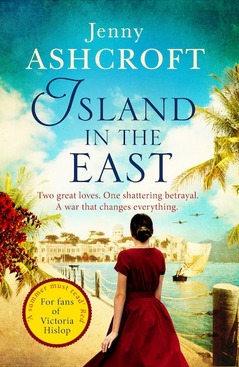
This is a dual period novel set in Singapore in the late 1890s and during World War II.

Identical twins Mae and Harriet Grafton arrive from Simla, India, in 1897, the subject of much gossip and innuendo among the Colonial establishment as to their parentage. The girls are largely at the mercy of one man, David Keeley, who will inherit a fortune from their guardian if and when he marries one of them.

David sets his sights on Harriet rather than Mae and tells the twins that nothing will stand in his way to get who and what he wants. Meanwhile, both Harriet and Mae fall in love with the trader, Alex Blake, and it is this, combined with the machinations of David, that will drive the twins apart.

In 1941, Ivy Harcourt, an expert in languages and radio "listener" is undergoing counselling following a traumatic experience during the London Blitz. Her grandmother is Mae. Ivy is also grieving over the loss of her love, Felix, and hopes that the transfer to a new position in the Far East listening to Japanese radio communications may restore her mental well-being. To her surprise, it seems various people in Singapore, including the elderly Alex, knew her grandmother, but all are reluctant to explain the connection. In spite of the very real possibility of Japan taking Singapore, Ivy falls in love with Australian soldier, Kit. 

This is an absorbing novel that has its twists and turns, not all of them plausible, and one can guess at the outset with identical twins there's bound to be some sort of identity switch between Mae and Harriet. A plot by the contemptible David borders on the outlandish, but it is the hinge on which everything turns. Ivy's past trauma will be compounded by what happens to her after Singapore falls to the Japanese and this part of the novel might be difficult for some readers, although it is probably less graphic than the reality of life in Changi and other prisoner of war camps.

The historical research is thorough, but there are issues with the style of narrative that includes unwieldly sentences and the unnecessary over-use of brackets to the point of distracting the reader. Strangely enough, these faults seem to dominate the first one-third or so of the book before improving considerably later. This suggests that maybe different editors had a hand in the final proof. Points of view are also ragged, with me having to re-read several passages to sort out which twin was the subject. Again, an editing issue. These construction quibbles aside, I remained involved in what is one of my favourite genres, i.e. epic stories of Empire, war and romance, and I plan to try other books by this author.

Three-and-a-half stars.

amazon.com

amazon.co.uk

​Booktopia


0 Comments

A Beautiful Rival

5/8/2023

0 Comments

 
Picture
 
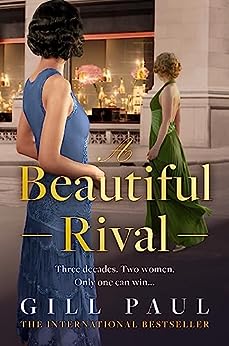
Two highly successful and enterprising business women dominated the world-wide beauty business throughout the 20th Century. One was Canadian-born Elizabeth Arden, the other, Helena Rubinstein, who was from Poland and with Jewish heritage. Their names are still synonymous with luxurious beauty products today.
 
This is the fictionalised tale of their famous rivalry that often went to extraordinary lengths of one-upmanship with few limits and stretched to character assassination, spying, deliberate obfuscation and even poaching one another’s managers and staff.
 
Elizabeth came from an impoverished background and did everything to hide that fact from the famous and high society women she catered to. She was a ruthless employer who had fixed ideas on a traditional style of presentation for her products. She believed that was what women wanted and this reflected in how her packaging was designed and displayed and how her salons must be run. She’d regularly “bounce” (sack) any staff member who crossed her, even for minor infringements. Yet her personal life was her Achilles’ heel and she was surprisingly naïve when she left herself open to exploitation by those she trusted. It was only her love of horses that sustained her when things went wrong.
 
Helena was equally forceful, having left Poland for Australia when her father refused permission for her to marry outside of the Jewish faith. With some experience in chemistry, in Australia she began experimenting with lanolin from sheep in order to produce the creams for which she would become famous. In time, she established salons elsewhere, in Europe and North America, and also counted on high society women to buy her products. Known for her passion for avante garde art, she took a different approach to that of Elizabeth, bringing 20th Century modernity to her salons. She married twice, but also had issues with personal relationships. Although she had two sons, she displayed little maternal affection towards them.
 
Helena’s Jewish background had often caused prejudicial issues for her long before the world teetered towards World War II. Elizabeth’s questionable anti-Semitic connections would escalate the rivalry to new heights.
 
This is an entertaining read and the author has skilfully negotiated through the inevitable commercial aspects of the two businesses in a concise way so that it doesn’t slow down the outrageous competitive strategies of both women. The reader will no doubt come to favour one character over the other. Both had their faults, but they do stand as role models with their dynamism and fierce belief that, with the right attitude, women can succeed in business in spite of seemingly unsurmountable obstacles.
 
(With many thanks to Edelweiss for the ARC.)
 
Four stars
 
 
Amazon.com
 
Amazon.co.uk
 
Booktopia

0 Comments

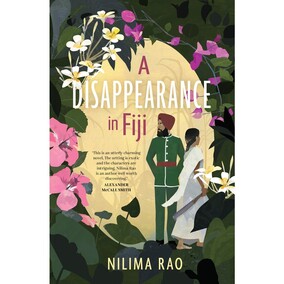
A Disappearance in Fiji

4/8/2023

0 Comments

 
Picture

Sergeant Akal Singh, formerly of the Hong Kong police, has taken up a new post with the Suva Division of the Fijian Constabulary. He was forced to leave Hong Kong after an embarrassing and near-career-destroying error on his part. In his new environment, Akal hopes to restore his good name but will come up against many challenges, not least bigotry and prejudice, in what he considers to be a colonial backwater.
 
His only friend since arriving in Fiji is his good-humoured Corporal Taviti, relative of an important chief but his boss, Inspector-General Thurstrom, is tough and much less accommodating. When a coolie woman goes missing on a sugar cane plantation, Akal is seconded to investigate. Normally, such a case wouldn’t warrant high priority, but with a delegation coming from India to investigate the conditions of the indentured workers and a local missionary writing to the local newspaper that she has been kidnapped, Thrustrom wants it solved as soon as possible.
 
Akal has many obstacles to overcome in order to find out what happened to the woman, Kunti, and also the overseer, Mr Brown, who disappeared around the same time - some thought he’d gone to join the war effort in Europe. Did Kunti go with him? The arrogant and snobbish wife of the sugar plantation’s owner, Mrs Parkins, is rude and dismissive of Akal, clearly due to his race. In company with the more tolerant local Dr Holmes, Akal travels to the plantation where together they investigate further as to what really happened.
 
Set in 1914, this is a detective novel that carries some echoes of Alexander McCall Smith’s Mma Ramotswe series, but with perhaps more bite as it accurately and unflinchingly faces the exploitation of indentured workers and general racist attitudes of the early 20th Century in British Colonies.
 
Even Akal, as a proud Sikh, has his own caste difficulties when it comes to dealing with the coolie families. “The [indentured] were not the kind of people he would have dealt with in India. Although his countrymen, they were not his people.” And “Suva’s façade of civility showed as many cracks as its roads had potholes.”
 
With a limited number of suspects and motives, the conclusion is not that surprising, but this is still a satisfying read. There is scope here for further adventures for Akal Singh, and maybe even a TV tie-in that could bring a fresh South Pacific setting to the cosy crime genre.
 
Four stars.


Amazon.com

Amazon.co.uk

Booktopia


0 Comments

    Categories

    All

    Archives

    November 2025
    October 2025
    September 2025
    August 2025
    July 2025
    June 2025
    May 2025
    March 2025
    February 2025
    January 2025
    December 2024
    November 2024
    October 2024
    September 2024
    August 2024
    July 2024
    June 2024
    May 2024
    April 2024
    March 2024
    February 2024
    January 2024
    December 2023
    November 2023
    September 2023
    August 2023
    July 2023
    June 2023
    April 2023
    March 2023
    January 2023
    December 2022
    November 2022
    October 2022
    September 2022
    August 2022
    July 2022
    June 2022
    May 2022
    April 2022
    February 2022
    January 2022
    December 2021
    October 2021
    August 2021
    July 2021
    June 2021
    May 2021
    April 2021
    March 2021
    October 2020
    September 2020
    August 2020
    July 2020
    April 2020
    March 2020
    February 2020
    January 2020
    December 2019
    November 2019
    August 2019
    July 2019
    May 2019
    April 2019
    February 2019
    January 2019
    October 2018
    August 2018
    July 2018
    June 2018
    April 2018
    March 2018
    February 2018
    December 2017
    October 2017
    September 2017
    August 2017
    July 2017
    June 2017
    May 2017
    April 2017
    March 2017
    February 2017
    January 2017
    December 2016
    October 2016
    September 2016
    August 2016
    July 2016
    June 2016
    May 2016
    April 2016
    March 2016
    February 2016
    January 2016
    December 2015
    October 2015
    September 2015
    June 2015
    May 2015

    See
    Historical Novel Society
    ​
    for my reviews of historical fiction
Powered by Create your own unique website with customizable templates.
  • Home
  • Blogs
  • About Me
  • My Books
  • Book Reviews